
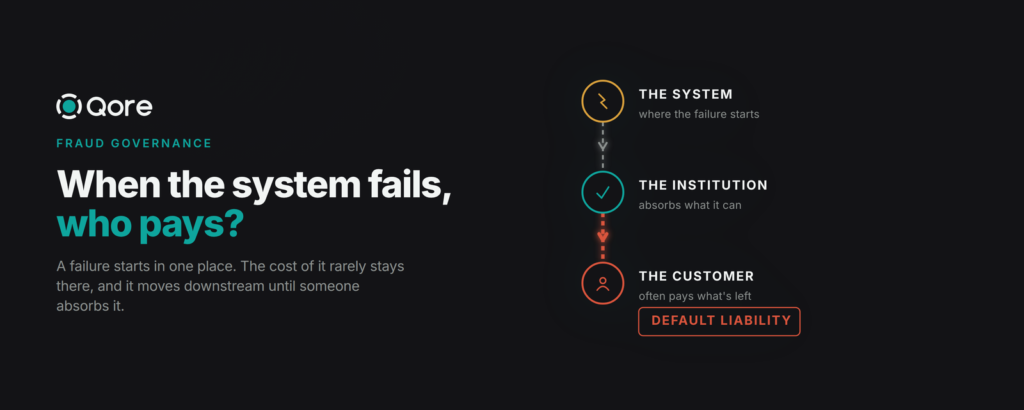
Many bank customers have maintained their accounts for over five years. They have seen navigated the shift from branch banking to mobile, adapted to successive app updates, and absorbed the occasional service disruption but when a customer’s salary transfer fails to process on a Monday morning, the same morning their rent is due, the same morning they promised the landlord the funds would arrive, something shifted.
Instead of calling the bank to file a complaint, they opened a competitor’s app, completed the account opening process in four minutes, and transferred their salary mandate the following week. What’s most interesting in this process is that a bank’s operations team might never know they lost a customer. The incident was logged as a performance disruption, and the customer’s loss was invisible.
This is the hidden cost of infrastructure performance failures in African banking, and it is almost never the number that appears in the post-incident report.
What The Incident Report Misses
When a database contention event causes transaction failures or delays, the incident report captures the technical facts: duration, affected systems, transactions impacted, resolution time. What it rarely captures is the downstream consequence, the customer who did not call to complain because they had already decided to leave, the salary payment that arrived too late to matter, the small business owner whose payroll run failed on a Friday afternoon.
Customer trust in digital financial services is not built only through marketing. It is built through consistent, reliable performance in the moments that matter most, and it is lost, often permanently, in moments when the infrastructure fails.
For institutions operating in a market where customer switching costs are falling, driven by CBN’s regulatory push toward greater financial inclusion and interoperability, a performance failure during peak period is not a recoverable inconvenience. It is a competitive event.
The Nigeria Inter-Bank Settlement System’s data on instant payment volumes illustrates the stakes. With transactions exceeding N1 quadrillion in 2024 and growing, the expectation of real-time settlement has become the baseline. When that baseline is not met, when transactions queue, delay, or fail during peak periods, the institution is not simply failing to meet a technical standard. It is failing the promise that some digital banking made to its customers.
Beyond the customer trust dimension, infrastructure performance failures carry a compliance exposure that is increasingly difficult to manage in the current Nigerian regulatory environment.
The CBN’s 2024 Risk-Based Cybersecurity Framework and the broader Operational Risk Management Guidelines place clear expectations on institutions regarding service availability, incident documentation, and proactive risk identification. An institution that experiences repeated performance disruptions without a documented evidence chain about what was detected, when, what was done, with what outcome is not simply experiencing a technical problem. It is accumulating regulatory liability.
The Nigeria Deposit Insurance Corporation’s operational risk framework similarly requires institutions to maintain evidence of their risk identification and mitigation activities. Database contention events that are managed informally, without the structured documentation that regulators expect, become liabilities that compound with each successive incident. Operational resilience should not be measured by the absence of disruptions. It is measured by the documented capacity to absorb, adapt, recover, and provide evidence that capacity is under examination.
An operations team that manages a contention event by quietly resolving it before it escalates, communicating with affected customers, closing the incident may believe the matter is contained. But if the same infrastructure experiences a second event, or if a regulatory examination surfaces the first one, the Board conversation that follows is considerably more difficult to navigate without a structured evidence record.
Board risk committees in Nigerian financial institutions are asking harder questions about infrastructure resilience than they were two years ago. The combination of CBN regulatory pressure, growing digital transaction volumes, and high-profile incidents across the African fintech sector has made operational resilience a board-level agenda item, not just a technology team concern.
What board risk committees are asking, and what most institutions struggle to answer without preparation is not whether a performance incident occurred. It is whether the institution had visibility of the risk before it materialized, whether the response was structured and documented, and whether the infrastructure provider has demonstrably fixed the cause rather than managed the symptom.
What Financial Institutions Should Be Demanding
The performance failures that database contention causes are not inevitable features of shared banking infrastructure. They are the consequence of infrastructure architectures that were not designed with performance isolation, and of governance frameworks that were not built to produce the documentation that institutions and regulators now require.
African financial institutions evaluating their infrastructure partnerships should be asking three questions that go beyond the standard uptime SLA.
First: What is your performance isolation architecture? Specifically, what prevents peak demand from one institution on shared infrastructure from degrading performance for others?
Second: What does your contention monitoring look like, and what is the detection-to-response window?
Third: When a performance incident occurs, what does the documentation look like, and can it be used directly in a board or regulatory review?
The infrastructure Standard African Banks Deserve
Africa’s financial sector is building something extraordinary. The expansion of digital financial services, the growth of real-time payment infrastructure, and the increasing sophistication of the institutions serving previously underserved populations represent one of the most significant financial inclusion stories of the past decade.
Infrastructure providers that treat performance isolation, contention monitoring, and remediation documentation as core governance obligations rather than optional enhancements to a standard service are raising the bar for what African financial institutions should expect from the technology partners they depend on.
An infrastructure provider company in Nigeria, Qore, operating across more than 500 financial institutions on the continent, has made performance isolation and real-time monitoring a baseline expectation rather than an optional feature. They have deployed real-time monitoring and structured its remediation documentation to meet CBN framework standards. The evidence of those changes is available to client institutions not as a marketing claim, but as a documented record that a CISO or CRO can take to a board risk committee.
This is the standard. The presence of governance and the documented proof that when the system was tested, the response was structured, the fix was structural, and the record is available for scrutiny.
For the customer who transfers her salary on a Monday morning, the difference between an institution with that infrastructure and one without it is not visible. Until the day it is.
REFERENCES
EFInA, Access to Financial Services in Nigeria Survey, 2023. Reliability and trust as primary factors in digital banking relationship retention.
Nigeria Inter-Bank Settlement System (NIBSS), Annual Report 2024. Instant payment transaction volumes.
Central Bank of Nigeria, Risk-Based Cybersecurity Framework and Guidelines for DMBs and PSBs, issued 31 May 2024, effective 1 July 2024.
Central Bank of Nigeria, Guidelines on Operational Risk Management for Financial Institutions, 2023.
Nigeria Deposit Insurance Corporation (NDIC), Operational Risk Framework for Deposit-Taking Institutions.
Basel Committee on Banking Supervision, Principles for Operational Resilience, 2021. Adopted as reference standard by CBN.
IMF, Regional Economic Outlook: Sub-Saharan Africa, 2025.
World Bank, Digital Finance for Africa: Infrastructure and Resilience, 2024.
Build Tomorrow, Today
Let’s discuss how our products can give your business the boost it needs.